


You plug in a USB drive or insert a DVD, only to see a blank screen, an error message, or nothing at all. The file plays on your computer but not in your car. You waste time converting files, searching forums, and experimenting with settings.
Car infotainment systems and DVD players are picky about video formats, codecs, resolutions, and USB drive formatting. What should be simple becomes a frustrating guessing game.

Why Playing Video in Your Car is So Frustrating (And How DivX Solves It)
At DivX, our mission is connecting people to entertainment anywhere, including your car. We believe watching videos on the road shouldn’t require technical know-how or endless trial-and-error.
That’s why DivX gives you the power to convert once and play reliably on the road. No more guesswork. No more frustration. Just entertainment, anywhere you want it.
Convert once. Play reliably on the road with DivX.
Not All “MP4s” Are Created Equal: Understanding Containers, Codecs, and Compatibility
What’s a Container vs. a Codec?
If one “MP4” video plays perfectly in your car while another doesn’t, the issue is the difference between a container and a codec.
- The container (MP4, AVI, MKV) is the suitcase that holds your video and audio
- The codec is what’s inside meaning the specific way your video and audio are compressed and stored
Just because your file is labeled “MP4” doesn’t guarantee it will work. What’s packed inside, the video codec (H.264, HEVC) and audio codec (AAC, MP3), determines if your car’s system can play it.
Car infotainment systems and DVD players are limited in which codecs they support, even if they recognize the container. Two MP4 files might look identical, but one plays while the other shows an error because the codecs inside are different.
Container vs. Codec:
| File Type (Container) | Typical Video Codecs | Typical Audio Codecs |
|---|---|---|
| MP4 | H.264, MPEG-4, HEVC | AAC, MP3 |
| AVI | DivX, Xvid, MPEG-4 | MP3, AC3 |
| MKV | H.264, HEVC, VP9 | AAC, MP3, FLAC |
Check what codecs your car system supports, not just the file extension.
The Most Common Video & Audio Formats in Cars
Car infotainment systems and DVD players support limited formats. Compatibility depends on both the file container and the codecs used inside it.
MP4 (H.264 video + AAC audio)
The most widely supported format in modern car systems, especially for USB playback.
If unsure, use MP4 with H.264 video and AAC audio for the highest compatibility.
AVI (DivX, Xvid, MPEG-4)
Common in older car DVD players and early infotainment systems. Often supported for disc, USB, or SD playback. Best suited for legacy systems.
MKV
Modern and flexible but inconsistently supported in vehicles. Only use MKV if your vehicle manual explicitly lists support.
Audio Codecs
- AAC – Widely supported in modern systems
- MP3 – Broad compatibility across old and new vehicles
- AC3 (Dolby Digital) – Sometimes supported in DVD-based systems, less common for USB playback
For maximum reliability, use MP4 (H.264 + AAC) unless your vehicle specifies otherwise.
Quick-Reference Chart: Typical Car Video & Audio Compatibility
| Container | Video Codec(s) | Audio Codec(s) | Typical Support in Cars |
|---|---|---|---|
| MP4 | H.264, MPEG-4 | AAC, MP3 | Modern infotainment, Pioneer, most USB playback |
| AVI | DivX, Xvid, MPEG-4 | MP3, AC3 | Older systems, car DVD players, some USB |
| MKV | H.264, HEVC, VP9 | AAC, MP3, FLAC | Limited; only select modern systems |
| VOB/MPG | MPEG-2 | MP2, AC3 | Car DVD players (disc only) |
When in doubt, check your car’s manual for a list of supported formats and codecs or use DivX Software to convert your video to a widely compatible option.

What Actually Works? Real-World Compatibility in Car Infotainment Systems
Format and Codec Support by Device Type
Every car entertainment system is a little different, but some patterns hold true across most brands and models.
Here’s what you need to know to avoid the most common playback pitfalls:
Car DVD Players
- Best for Discs: Stick with MPEG-2 files (.mpg or .vob), this is the native format for DVDs and is almost universally supported.
- For USB/SD Playback: Some models also accept AVI files (DivX, Xvid or MPEG-4 codecs) and occasionally MP4. Always check your player’s manual for specifics.
Modern Infotainment Systems (USB Playback)
- Best Bet: MP4 files using H.264 video and AAC audio are the most broadly supported for USB playback.
- This format strikes the best balance between quality, compatibility, and file size.
Pioneer Car Players
- Recommended: MP4 (H.264/AAC or MP3) and AVI (DivX or Xvid).
- Resolution: Many newer Pioneer models support up to 1080p, but older units may be limited to 720p or less. Always check your device’s specs.
- Tip: Even within the same brand, supported formats can change by model or firmware version.
Aftermarket & Rear-Seat Entertainment Systems
These systems often offer broader format support, but for maximum reliability, stick with standard formats like MP4 (H.264/AAC) or AVI (DivX, Xvid).
What Works Where? Quick Compatibility Table
| Device Type | Best Container & Codec(s) | Max Resolution (Typical) | Notes |
|---|---|---|---|
| Car DVD Player (Disc) | MPEG-2 (.mpg, .vob) | 480p (SD) | Universal for DVD discs |
| Car DVD Player (USB/SD) | AVI (DivX, Xvid), MP4 | 720p | Varies by model |
| Modern Infotainment (USB) | MP4 (H.264/AAC) | 720p–1080p | Most reliable for new cars |
| Pioneer Car Player | MP4 (H.264/AAC/MP3), AVI | 720p–1080p (model-based) | Check manual for exact specs |
| Rear-Seat/Aftermarket System | MP4, AVI | 720p–1080p | Broader support, but varies |
Learn how DivX makes in-car playback easy.
Other Crucial Factors: Resolution, Bitrate, USB Formatting
Even if you’ve chosen the “right” format, other technical factors can make or break playback:
- Resolution: Most car systems max out at 720p or 1080p. 4K files are rarely supported and often won’t play at all.
- Bitrate: High-bitrate files can cause stuttering, freezing, or outright failure. Aim for moderate bitrates (usually under 10 Mbps for video).
- USB Formatting:
- FAT32 is the most widely supported format for car USB ports, but it limits individual file sizes to 4GB.
- exFAT allows larger files but may not be recognized by all systems, always check your manual.
Quick Checklist: Prepping Your USB Drive for Car Playback
- Format the drive to FAT32 (unless your car supports exFAT).
- Keep individual video files under 4GB for FAT32.
- Use MP4 (H.264/AAC) for best compatibility.
- Limit resolution to 1080p or lower.
- Avoid very high-bitrate or 4K files.
- Double-check your car’s manual for any unique requirements.
By following these guidelines, you’ll dramatically improve your odds of enjoying smooth, reliable video playback, no matter which screen is in your car.

Why Playback Fails (Even When the File “Looks Right”)
Common Reasons for Playback Failure
Even when you use the correct file format, playback can still fail due to compatibility limits within the system.
- Unsupported Codec Inside a Supported Container: An MP4 or AVI file may contain an unsupported codec. Example: MP4 with HEVC (H.265) may fail where H.264 works.
- Audio Format Not Recognized: If the audio track uses AC3, FLAC, or another unsupported format, the video may play without sound or not at all.
- File Size Too Large for USB Format: USB drives formatted as FAT32 cannot read files larger than 4GB.
- Resolution or Bitrate Exceeds Device Capability: Many infotainment systems and DVD players can’t handle videos above 720p or 1080p, or those with high bitrates. Trying to play a 4K or high-bitrate file can result in stuttering, freezing, or failure to load.
- Frame Rate Incompatibility: Some systems expect a standard frame rate (like 24, 25, or 30 fps). Unusual frame rates can cause playback errors.
- Corrupted or Improperly Converted Files: Incomplete conversions or transfer errors can prevent playback regardless of format.
Troubleshooting Guide: Step-by-Step Solutions
At DivX, we’ve helped users overcome playback headaches for over two decades. Here’s how you can systematically diagnose and solve the most common issues:
- Read the Error Message (If Any):
Some systems will display a specific error (e.g., “Unsupported format” or “File too large”). This can provide a vital clue. - Check Your Device Manual:
Look up the exact formats, codecs, resolutions, and file size limits supported by your car’s infotainment system or DVD player. This is the most reliable source of truth. - Test with a Known-Good File:
Use a video file that’s confirmed to work on your system (often provided by the manufacturer or downloaded from a trusted source). If this plays, your device is working properly and the issue is with your new file. - Compare File Specs:
Use a tool like DivX Converter or MediaInfo to check the video and audio codecs, resolution, bitrate, and file size. Compare these specs to your device’s requirements. - Try a Different USB Drive or Port:
Sometimes, the issue is with the drive itself or the USB port, try another one to rule out hardware problems. - Re-Convert the File Using DivX:
If all else fails, use free DivX Software to convert your video to a widely compatible format (MP4 with H.264 video and AAC audio, 1080p or lower, moderate bitrate).
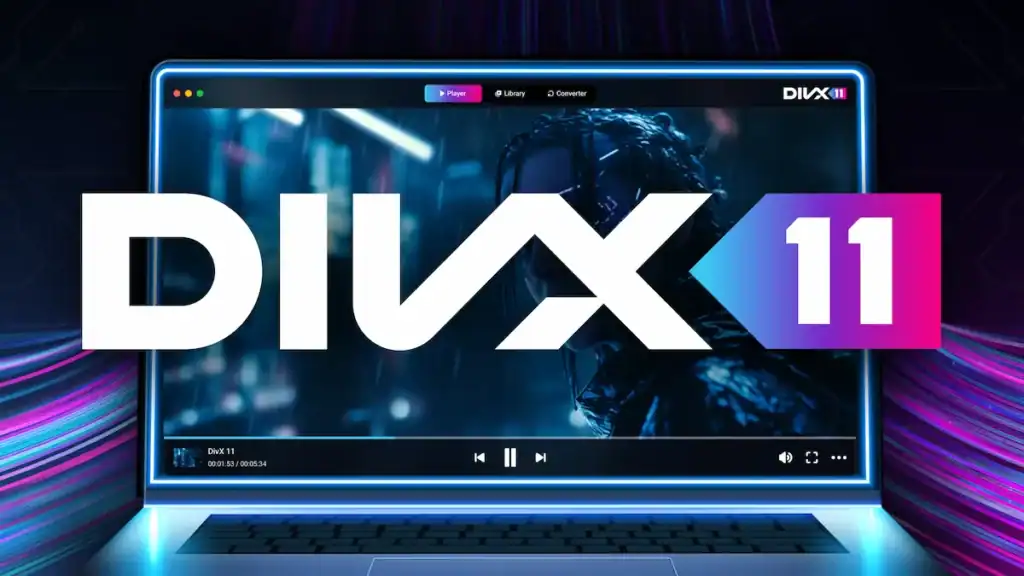
The Smart Way to Prepare Video for Your Car: The DivX Approach
Why Guesswork Doesn’t Work (and What to Do Instead)
Random online converters often apply incorrect codecs, unsupported audio formats, or excessive bitrates. The result: poor quality or files that still won’t play in your car. Repeated conversions also reduce video quality.
Step-by-Step: How to Convert Video for Reliable Car Playback
- Download and Install Free DivX Software
Get the latest version of DivX Software from our official website. Installation is fast and straightforward. - Add Your Video
Select the Converter tab within the software and drag your video file into the window. - Select Your Profile
Select the MP4 profile (with H.264 video and AAC audio – also listed as “iPad” or “iPhone”), the most widely supported combo for car infotainment systems and DVD players. - Adjust Resolution, Bitrate, and Audio Codec
- Set the resolution to 720p or 1080p (unless your car supports higher).
- Choose a moderate bitrate (usually under 10 Mbps for smooth playback).
- Make sure the audio codec is set to AAC or MP3.
- Export and Transfer to USB
Click “Convert.” Once finished, transfer your new video to a USB drive formatted as FAT32 (for files under 4GB) or exFAT (if your car supports it and you need larger files).
Tip: Always safely eject your USB drive to avoid file corruption.
In-Car Playback Is Just Another Screen: The Connected Entertainment Ecosystem
Your car is one of many screens where you watch video. Phones, TVs, tablets, and vehicle infotainment systems all have different compatibility limits, but the preparation process is similar.
A consistent encoding approach allows video to move between devices with fewer playback issues.
Prepare Video for Multiple Screens
- Phones: Use device-compatible MP4 (H.264 + AAC) for iOS and Android.
- TVs: Convert to formats supported by smart TVs or media players.
- Tablets: Optimize resolution and bitrate for portable viewing.
- Vehicles: Use supported containers, codecs, and file sizes for infotainment systems or rear-seat displays.
When videos are encoded properly, they can play reliably across multiple environments without reformatting for each device.


DivX Authority: 25+ Years of Digital Video Innovation
DivX has worked in digital video for more than 25 years, focusing on reliable, cross-device playback.
- 1+ billion software downloads
- Billions of licensed playback devices worldwide
- Technology integrated into TVs, media players, and vehicle infotainment systems
- Adopted by major consumer electronics manufacturers
Jim Styn, Head of Marketing at DivX, explains:
“Our goal has always been to provide a high-quality, seamless video experience for everyone. We’re launching these resources to demystify the process and empower our community with the knowledge to get the most out of their video collections.”
DivX’s focus has remained consistent: improve compatibility, simplify playback, and help users get more from their video libraries across devices.
Frequently Asked Questions
What is the best video format for a car DVD/USB?
For car DVD players, the safest format is MPEG-2 (.mpg or .vob) for discs. For USB playback in modern infotainment systems, MP4 files using H.264 video and AAC audio are the most widely supported.
Why won’t my MP4 play in my car?
Not all MP4 files are created equal. Your car may only support certain codecs inside the MP4 container (typically H.264 for video and AAC for audio). If your file uses a different codec, it may not play, even if the extension is correct.
How do I convert a video for my car infotainment system?
Use DivX Converter to select MP4 (H.264/AAC) as your format. Adjust the resolution to 720p or 1080p, keep the bitrate moderate (under 10 Mbps), and ensure your USB drive is formatted correctly. Our step-by-step guide above walks you through the process.
What resolution/bitrate should I use?
Most car systems support up to 720p or 1080p. Avoid 4K files, as they are rarely compatible. Keep video bitrate under 10 Mbps for smooth playback and smaller file sizes.
How do I format my USB drive for car playback?
Format your USB drive as FAT32 for maximum compatibility, but remember this limits individual files to 4GB. If your car supports exFAT, you can use it for larger files, but always check your owner’s manual first.
Is it legal to watch video in the front seat?
In most places, it is illegal and unsafe to play video on a screen visible to the driver while the vehicle is in motion. Video playback should be limited to rear-seat screens or when the vehicle is parked. Always follow local laws and safety guidelines.
Get Started: Enjoy Seamless In-Car Video with DivX
Eliminate playback issues by converting your videos with the correct format and settings from the start.
Download free DivX Software and use the recommended settings in this guide to prepare files for reliable in-car playback. Convert once and use your videos across compatible devices without repeated trial and error.
Whether you’re preparing for a road trip or daily use, proper encoding ensures smoother playback and fewer compatibility problems.
Additional Resources
- Detailed Guides: Take a deeper dive into DivX capabilities with some additional resources.
- Support: Get direct assistance from the DivX Support team.
DivX provides tools and documentation designed to improve compatibility and simplify video playback across devices.